PC maintenance · Complete guide
The Practical Guide to a Faster Windows PC

A computer rarely slows down because it got old. It slows down because it got buried — under startup programs nobody asked for, under temporary files Windows forgot to delete, under a power plan that quietly caps the processor. This guide digs it back out, section by section, starting with the single command that removes most of the dead weight at once.
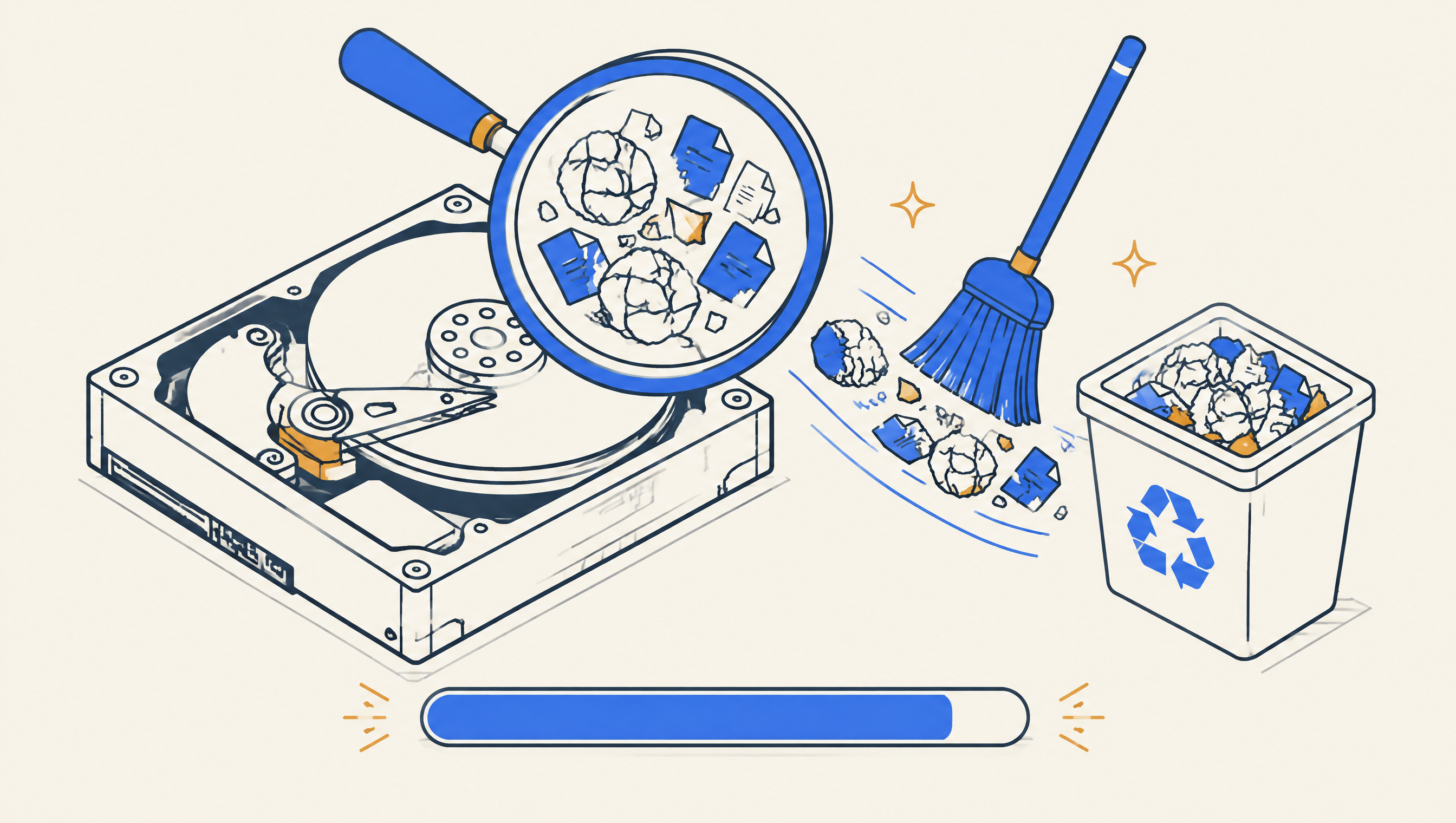
1. What the one command cleans
One line, pasted into the Run dialog, sounds too small to matter. It is not — because it targets the exact categories of clutter that every Windows machine accumulates in silence:
- Temporary files. The debris of years of installs and updates: setup leftovers, error reports, crash dumps. Windows created them for minutes and kept them for years.
- Unused and orphaned files. Config scraps and logs belonging to programs you removed long ago — clutter with no owner.
- Aged cache. Fresh cache speeds things up; cache from months ago only makes the system search longer before finding anything real.
- Recycle Bin contents. Files you deleted that are still fully present on the drive, sometimes gigabytes at a time.
- Old update packages. Windows keeps prior update files as a safety net and almost never reclaims them — on older machines this is regularly the largest single block of recoverable space.
Your documents, photos, bookmarks and installed programs are untouched. The command removes the layer of noise underneath them — which is why, once the noise is gone, opening things simply takes fewer steps.
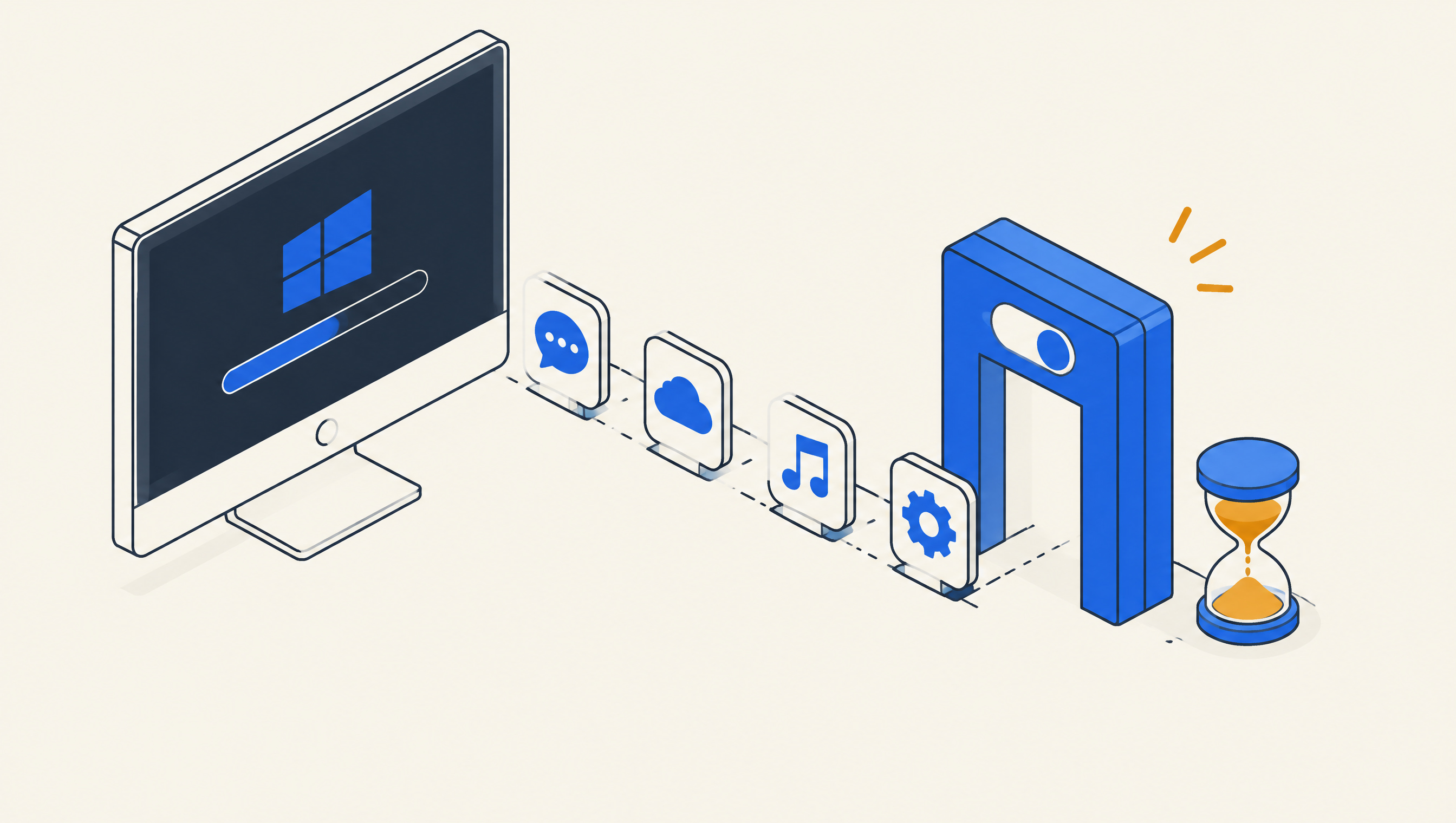
2. The crowded morning: startup programs
Watch what happens in the first fifteen seconds after power-on. Before you can click anything, a crowd of updaters, messengers, sync agents and "helpers" demands its share of the boot. Each is small; the pile is not.
- Open Task Manager with Ctrl + Shift + Esc.
- Go to Startup apps and sort by Startup impact.
- For each entry ask: "did I open this myself today?" If no — disable it. The app still works; it just stops inviting itself to every boot.
3. Space you forgot you had
Any drive above roughly 90% full stops performing well regardless of its age — Windows needs free room to work in. Most machines are sitting on space they do not remember hoarding.
- Storage Sense (Settings → System → Storage) automates temp and bin cleanup. Enable once; never think about it again.
- Disk Cleanup reaches the deep layers: Win + R →
cleanmgr→ after the first pass click Clean up system files. The second scan is where the multi-gigabyte update leftovers appear. - Downloads folder: sort by size, delete installers of programs you installed years ago. Ten honest minutes, often tens of gigabytes.
4. Patches and drivers: speed you already paid for
Every cumulative update carries performance fixes, and an outdated storage or graphics driver can hold an entire machine back. Declining updates is declining free repairs.
- Settings → Windows Update → Check for updates. Take everything, including the optional driver updates — that is where storage and GPU fixes arrive.
- Restart afterward. A share of fixes only activate on a reboot; "updated but never restarted" machines stay slow for exactly this reason.
- Drivers from the manufacturer only. If one device misbehaves, get its driver from the maker's own site. "Free driver downloader" pages are an adware business.
5. When something else is living in your PC
Some machines are not cluttered — they are occupied. Adware and cryptominers run in the background and consume precisely the resources you are missing. The signature: a busy PC while you do nothing.
- Open Task Manager at an idle moment. Healthy idle numbers are single digits. Sustained 50%+ means something unauthorized is running.
- Run a full Windows Security scan — the quick scan skips the places problems actually hide.
- For a second opinion, Microsoft's Safety Scanner runs from a USB stick and installs nothing.
6. The power plan that caps your processor
Many laptops ship in a battery-saving profile that throttles the CPU even while plugged in — a silent performance tax no cleanup can lift. Desktops have their own version of the trap.
- Settings → System → Power: when plugged in, choose Best performance.
- On desktops confirm Balanced or High performance — never Power saver.
- Vendor utilities (Lenovo Vantage, Dell Power Manager) and BIOS eco modes override Windows — check them too.
7. Forty tabs and nine extensions
For most people the browser effectively is the computer — and a browser carrying nine extensions and forty tabs will make an SSD feel like a spinning disk.
- Every extension runs code on every page. Remove the ones you cannot name; keep the two or three you use daily.
- Every open tab keeps memory alive. Past a dozen, something starts swapping.
- When pages crawl: Ctrl + Shift + Del → Cached images and files. This fixes more slowdowns than any utility.
- Diagnostic trick: try the same workload in a second browser. Fast there, slow in the first — the browser is the patient, not the PC.
8. Trading animations for responsiveness
Transparency and window animations cost real GPU time on every interaction — a price older machines and integrated graphics pay constantly.
- Win + R →
sysdm.cpl→ Advanced → Performance → Settings. - Choose Adjust for best performance, then re-tick one box: Smooth edges of screen fonts. The interface looks normal and runs lighter.
9. The hardware ladder
Software has a ceiling. If the machine still drags after everything above, the fix is physical — and the order matters more than the budget:
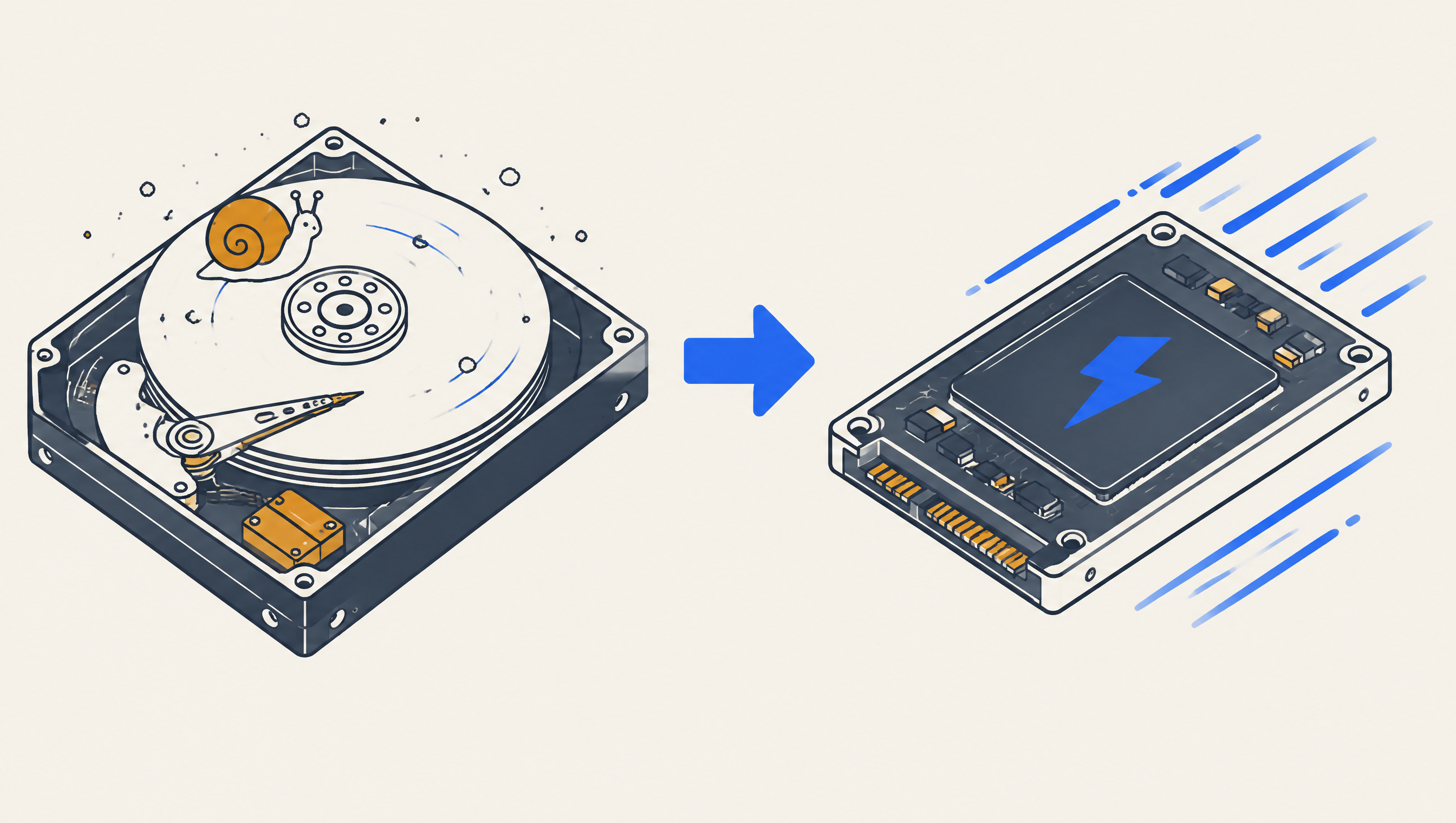
- An SSD. Still booting from a spinning drive? This is the biggest upgrade in consumer computing: two-minute boots become fifteen seconds, and every launch transforms.
- 16 GB of RAM. Windows 11 endures on 8 GB and thrives on 16. A second stick costs less than a dinner out and fits in ten minutes.
- Dust removal. A clogged fan forces the processor to slow itself to avoid overheating. Five minutes with compressed air reverses months of throttling.
- CPU and GPU matter for games and heavy work — after the three above, never before.
10. Staying fast without thinking about it
A cleanup is an event. A fast PC is four small habits:
- Restart weekly. Sleep preserves memory leaks along with your session; a real reboot resets everything.
- Keep 10–15% of the system drive free — that margin is Windows' workspace.
- Install from official sources and decline the pre-ticked "bonus" offers in installers.
- Let updates and Storage Sense run themselves — automation beats discipline.
Ready when you are
The reading helps; the command delivers. Copy it, drop it into Win + R, hit Enter.
Grab the command using the button on the right
Written by the PC-Cleanners-Us team. General maintenance advice for Windows 10 and 11 — back up important files before making system changes. Corrections: [email protected].